
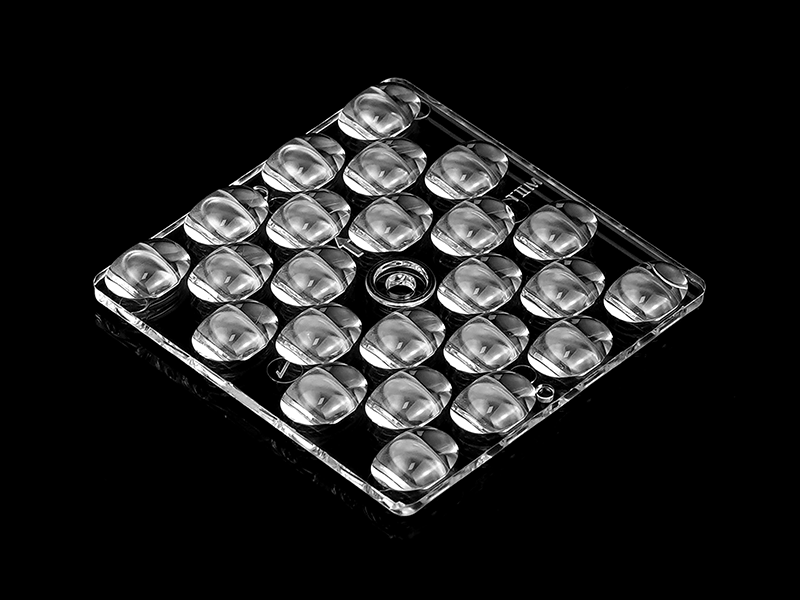
Road safety is often attributed to driving behavior or traffic regulations, but in the engineering field, a decisive variable is often overlooked – the microscopic optical structure of the signal lens. For a professional manufacturer like Qixiang Traffic, the traffic lamp lens design has already transcended the basic stage of “light transmission” and has become an engineering scientific practice concerning the precise guidance of light energy and the precise confrontation of environmental interference.
1. The contradiction between speed and recognition time:
When a vehicle travels at 60 km/h, the driver has only about 2.5 seconds to complete the “capture-decode-response” chain for a signal 150 meters away. The traffic light lens must provide sufficient angular light intensity redundancy within this window period.
2. Suppression of environmental light noise:
The ground illuminance of midday sunlight can exceed 100,000 lux, which is tens of times the light intensity of the signal light. The signal lens needs to use non-imaging optical design to reshape the Lambertian emission characteristics of the LED chip into a “light cone” with a specific angle distribution, so that the light energy is precisely directed to the driver’s visual window instead of being inefficiently absorbed by the sky or the road surface.
3. Visual physiological adaptation:
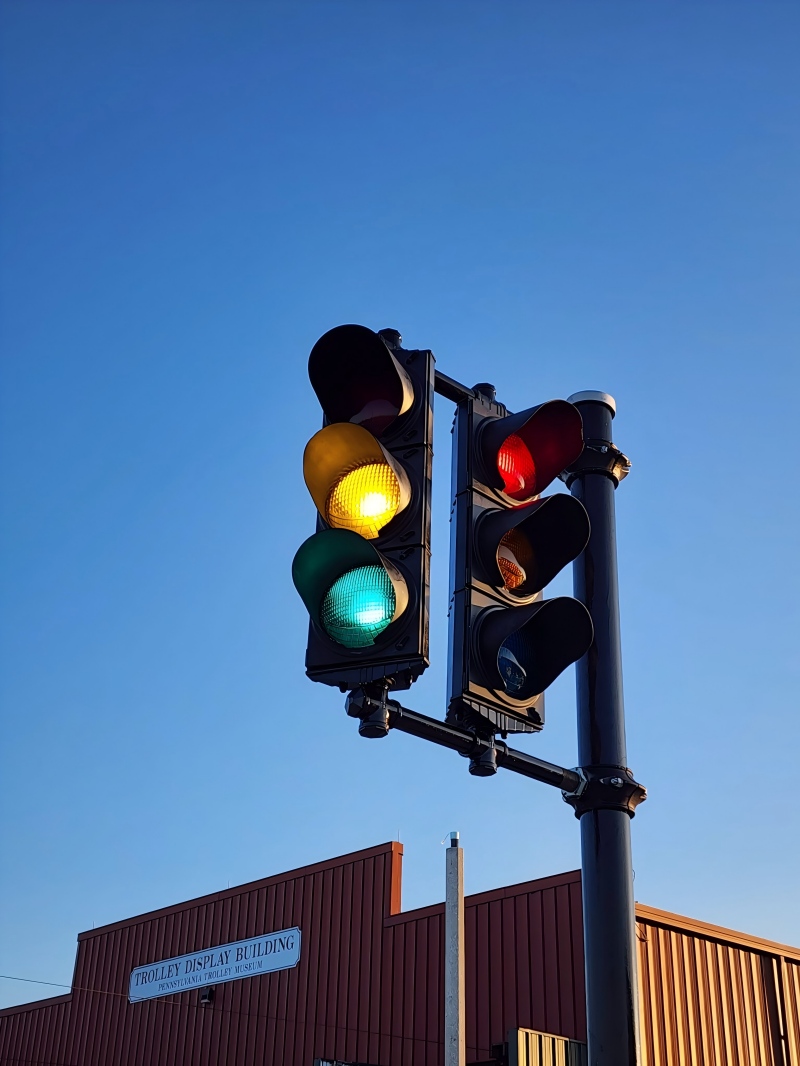
Under the state of normal adaptation of the human eye, the sensitivity to red light decreases, while the recognition ability for green light weakens under the state of dark adaptation. This requires the signal lens to optimize spectral matching for different colors, for example, increasing the light flux density of a specific wavelength band for red signals to compensate for the physiological visual attenuation.
Engineering countermeasures for environmental erosion: Revolution in the surface microstructure of lenses.During the 25-year outdoor design lifespan, tarffic lamp lenses are constantly subjected to environmental erosion attacks. The solutions embody the wisdom of precise manufacturing:
Light transmission strategy in rainy and foggy weather. The attachment of water droplets on the signal lens surface causes unpredictable refraction, resulting in distortion of the light spot. High-end designs adopt superhydrophobic micro-nano structures, based on the biomimetic principle of the lotus effect, to make the contact angle greater than 150°. Water droplets quickly roll off, while the inner surface of the traffic light lens is designed with groove-shaped drainage structures. Capillary force is utilized to guide the condensed water out of the light path area, ensuring that the main light beam maintains an 85% or more light flux retention rate in the rain and fog.
Summary: The tarffic lamp lenses is the “silent guardian” of road safety.
When we shift our gaze from the grand traffic system to this precise optical component of less than 30 centimeters, we will find that it integrates the cutting-edge wisdom of multiple disciplines such as materials science, non-imaging optics, and surface engineering. Every micro adjustment of the tarffic lamp lens curvature, every engraving of a surface groove, is to enable traffic participants to have an additional second of clear judgment, building an invisible yet extremely solid defense line for road safety. In the technical dictionary of signal light manufacturers, “visibility” is never the end; “clear and unambiguous visibility” is the eternal pursuit.
Post time: Sep-03-2026


