
Orderly traffic flow at urban intersections relies on the stable support of traffic lights. Therefore, selecting the right traffic signal poles is a crucial step in the early stages of road construction. Pole selection should not be based solely on appearance; it requires comprehensive consideration of the intersection’s size, installation method, load conditions, and local environment.
When it comes to choosing the right traffic signal poles, there are a few types to consider. You’ve got your octagonal traffic light poles, conical traffic light poles, and rectangular traffic light poles, each with their own strengths. Octagonal traffic signal poles are a popular choice for regular intersections because they can handle stress evenly and have a neat, symmetrical shape. Conical traffic signal poles, on the other hand, have a sleek look and are often used on scenic roads or main streets in towns. Rectangular poles are super strong and can handle heavy loads, making them perfect for big intersections with lots of traffic lights and equipment. Then there are these integrated gantry frames, which are like the ultimate solution for big, multi-lane intersections – they can hold multiple sets of traffic lights and monitoring gear all at once. So, to figure out which type of pole you need, you first have to determine its structural type. This will help you decide which one is best for your specific situation. Whether you’re dealing with a busy intersection or a scenic road, choosing the right traffic light poles is crucial for safety and efficiency. By considering the different types of poles and their characteristics, you can make an informed decision and get the right equipment for the job.
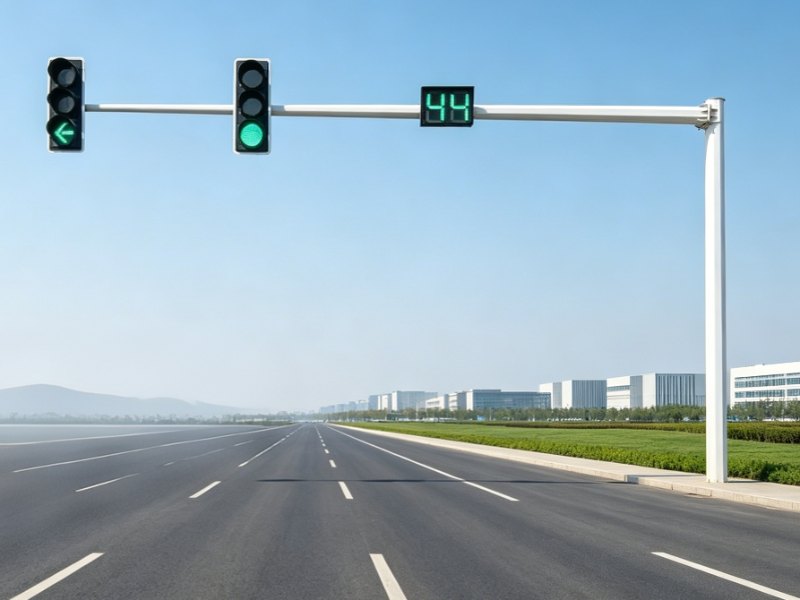
When it comes to choosing the right cantilever length, it’s a crucial part of the process. The number of lanes on a road plays a big role in deciding how long the cantilever should be. For example, if you’re dealing with a two-lane road, a cantilever length of 3-5 meters is usually a good choice. On the other hand, if you’re working with a four-lane road, you’ll typically want to go with a cantilever length of 6-8 meters. And for main roads with six or more lanes, a length of 9-12 meters is often recommended. But here’s the thing: if you make the cantilever too long, it can cause problems. The bending moment of the pole increases, which means you’ll need to thicken the pipe wall to prevent it from bending and deforming over time. It’s also important to make sure there’s enough safety distance to keep the traffic lights directly above the lane, without any obstacles like trees or overpasses getting in the way. This is key to ensuring that everything runs smoothly and safely. So, when you’re calculating the cantilever length, you need to take all these factors into account. It’s not just about slapping up some traffic lights and calling it a day – you need to think carefully about the specifics of the road and the traffic that will be using it. By doing so, you can create a safe and efficient system that works well for everyone.
The stuff that poles are made of and how they’re protected from rust really matters when it comes to how long they last. Usually, traffic signal poles are made with a type of steel called Q235, and they’re protected with a process called hot-dip galvanizing, or sometimes that’s followed by another layer of protection called electrostatic powder coating. But in areas near the ocean or rivers, where the air is salty and can corrode the poles, it’s better to use two layers of protection – hot-dip galvanizing and powder coating – to keep them from rusting. In cities that are farther inland, a single layer of hot-dip galvanizing is usually enough. The thing is, traffic signal posts that are outside all the time, getting rained on and sitting in the sun, will start to rust if they’re not protected well enough, and that can be a safety problem. So, it’s really important to use the right materials and protection methods to make sure the poles last a long time and stay safe.
Environmental load conditions cannot be ignored. Different regions have specific requirements for wind resistance. Plains areas generally meet a wind resistance standard of 27 m/s, while typhoon-prone areas require a standard of 36 m/s or higher. When mounting multiple devices, the total weight of traffic lights, cameras, and housings must be calculated to prevent overloading. The foundation must also match the poles; high cantilever poles require larger anchor bolts and concrete bases.
When it comes to setting up traffic lights, there are a lot of things to think about. Not just the rules, but also how they look. For example, in small towns, you can just mount them on walls. But in big cities, the traffic signal posts have to match the city’s style and color. The whole process follows strict guidelines to make sure everything is safe and works well. They don’t use poles that are too thin or don’t meet standards. The goal is to pick traffic light poles that do their job and last a long time, so you don’t have to spend a lot of money fixing them later. This way, traffic keeps moving smoothly and safely.
Qixiang makes all kinds of traffic light poles, like the octagonal kind, conical ones, and big gantry poles. Our traffic signal posts are made from strong Q235 steel and we protect them from rust with a special hot-dip galvanizing and powder-coating process. If you need a traffic signal pole with a certain arm length or want it to be able to withstand strong winds, we can do that. We have lots of different sizes and types, and our poles are built to last. You can even get them with anchor bolts for extra security. If you’re looking for good traffic signal posts, just let us know what you need and we’ll take care of you – we’re all about providing great solutions for roads.
Post time: Jul-24-2026


