
Reliability is one of the most important factors when selecting LED traffic signal lights. A red yellow green traffic light may operate continuously in outdoor environments, where temperature changes, moisture, vibration, dust, and electrical fluctuations can affect its performance. For this reason, professional manufacturers should not rely on a single final inspection. Instead, testing needs to be incorporated throughout the production process.
At Qixiang Traffic, factory testing is organized around several key stages, from incoming material inspection to final product verification. This approach helps identify potential problems before the signal lights are packed and shipped.
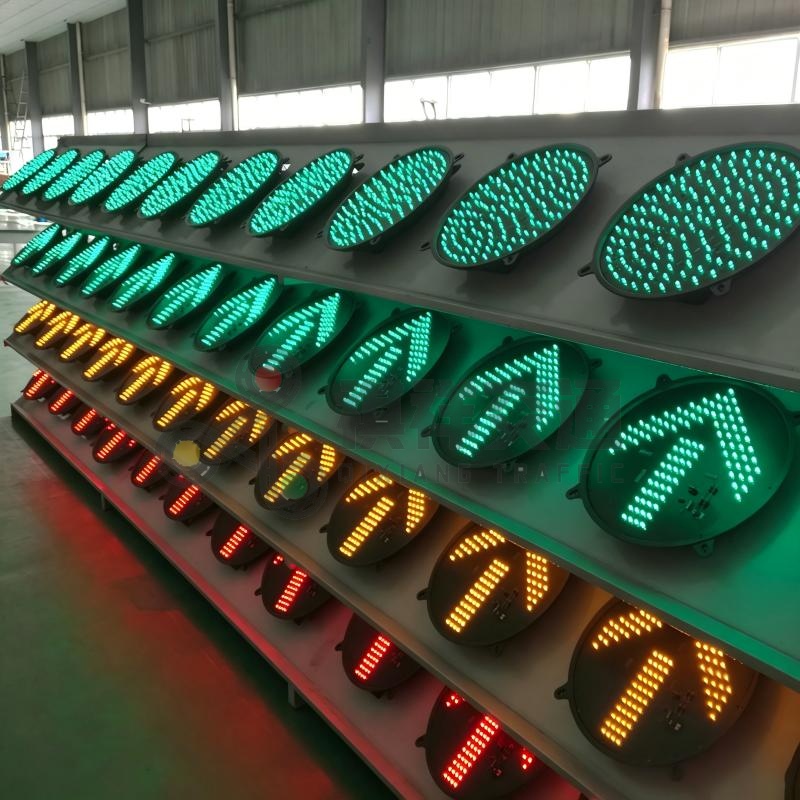
1. Incoming Material Inspection
Quality control begins before assembly. Components such as LED modules, electronic parts, housings, wiring, connectors, and other materials are checked when they arrive at the factory.
Inspectors verify specifications, appearance, quantities, and basic electrical characteristics against the production requirements. Materials that do not meet the required criteria are separated before entering the manufacturing line. This first step reduces the possibility of defective components being incorporated into finished signal lights.
2. Electrical and LED Module Testing
After the LED modules are assembled, technicians check whether each lighting unit operates correctly under the specified power conditions. The red, yellow, and green indications are examined individually.
The inspection focuses on stable illumination, uniform light distribution, correct color output, and abnormal LED behavior. Loose connections, dark spots, flickering, or inconsistent brightness can indicate problems with the module or circuit and should be corrected before the next production stage.
3. Process Inspection During Assembly
Testing does not stop after the LED module works. During assembly, quality personnel check wiring connections, component positioning, fastening, and the fit between the optical and housing components.
This stage is particularly important because an electrically functional red yellow green traffic light can still have mechanical or assembly defects. Process inspection allows technicians to correct these issues immediately instead of discovering them after the product has been completely assembled.
4. Aging and Continuous Operation Test
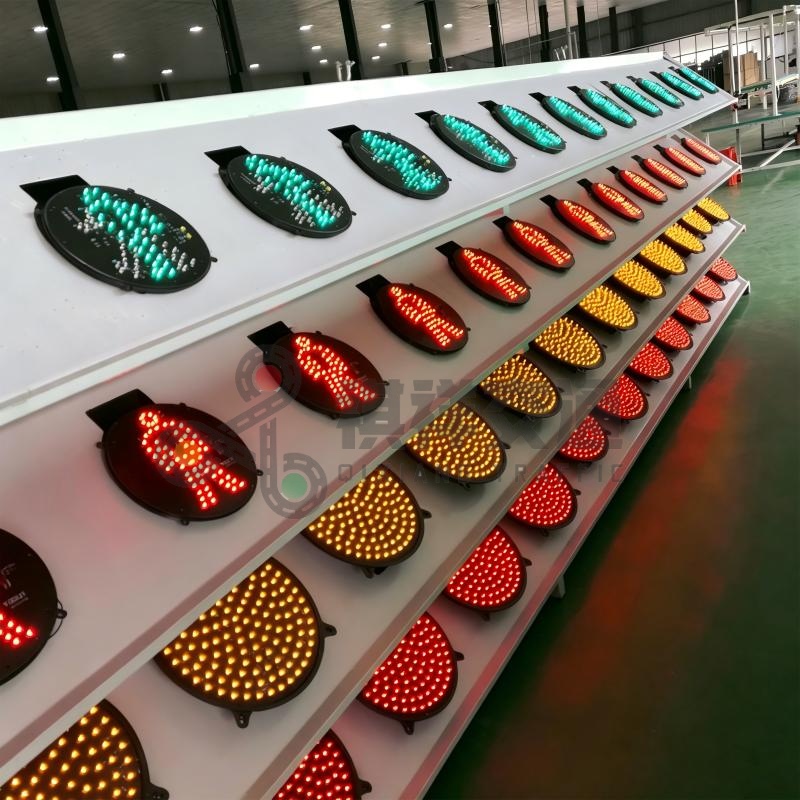
Aging testing is used to reveal potential early-stage failures. Finished or semi-finished red yellow green traffic light units are operated continuously for a defined period under controlled conditions.
During the aging process, technicians monitor illumination, electrical stability, heat generation, and unusual behavior. Qixiang’s production information includes a 72-hour artificial aging stage, providing an additional opportunity to identify unstable components before final inspection.
5. Thermal and Environmental Performance Checks
Heat management is another important part of LED traffic signal testing. LEDs and electronic components generate heat during operation, so excessive temperature can affect long-term reliability.
Manufacturers can use temperature-rise testing and related laboratory equipment to evaluate how the product performs under demanding conditions. Qixiang also highlights 3D moving infrared temperature-rise testing as part of its product testing capabilities. These checks help evaluate whether the red yellow green traffic light can maintain stable operation when exposed to elevated temperatures.
6. Final Functional Inspection
Before packaging, every completed unit goes through a final inspection. Technicians verify the lighting functions, appearance, wiring, housing condition, and overall assembly quality.
The red yellow green traffic light is powered on again to confirm that the final assembled product performs as expected. Any product that does not satisfy the internal inspection requirements is held for correction or further evaluation rather than being released for shipment.
7. Packaging and Pre-Shipment Verification
The last step is not simply putting the product into a carton. The factory checks product identification, accessories, packaging condition, and order specifications before shipment.
A well-organized testing procedure creates a clear quality-control chain: incoming materials are checked, production stages are monitored, completed products are tested, and only qualified units proceed to delivery.
For buyers of LED traffic signal lights, understanding this process can be useful when evaluating manufacturers. A reliable supplier should be able to explain not only the product specifications, but also how those specifications are verified inside the factory. Consistent testing provides an important foundation for dependable traffic signal performance in real-world road applications.
Post time: Aug-18-2026


