
Selecting the appropriate size for traffic signals is a fundamental decision in intersection design, directly influencing road safety and traffic efficiency. For signal manufacturers and municipal authorities, understanding the engineering principles behind choosing 200mm (approximately 8 inches), 300mm (12 inches), and 400mm LED signal lamps is crucial.
The physical size is directly related to the optical performance of the signal lights. Each size has different technical characteristics, making it suitable for different application scenarios.
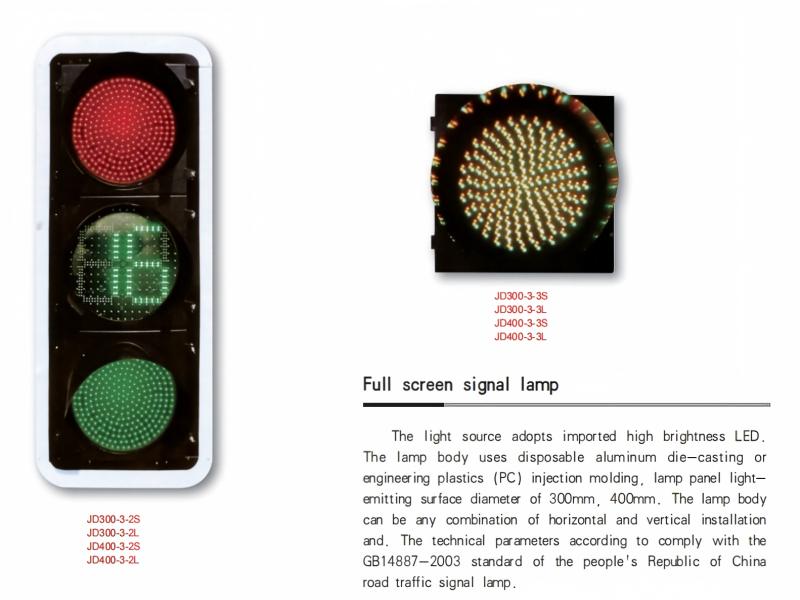
200mm (8 inches) LED signal lamps are typically used on secondary roads, auxiliary signal lights, or low-speed areas. Their arrow or circular indicator LED count is approximately 36 to 45. The power consumption is extremely low, usually not exceeding 5 to 6 watts. However, their compact size means a smaller effective light-emitting area, making them most suitable for shorter visibility distances.
300mm (12 inches) signal lights are the industry standard for most new intersections and are used as main LED signal lamps on roads with a speed limit of less than 80 kilometers per hour. The number of LEDs is significantly increased, approximately 90 to 105. The typical power consumption is slightly higher, at ≤ 7-8 watts. This makes it an equally balanced choice to meet the typical visibility requirements of most intersections.
400mm (16 inches) signal lights are designed for maximum visibility and are used for major arteries, highways (≥ 80 kilometers per hour), and wide intersections. It is the most powerful option, integrating approximately 117 to 125 or more LEDs. Its power consumption range is ≤ 9 to 13 watts, reflecting its higher output. These larger LED signal lamps are installed at a regulatory height of at least 5.5 to 7 meters above the road to ensure clear visibility for approaching traffic flows.
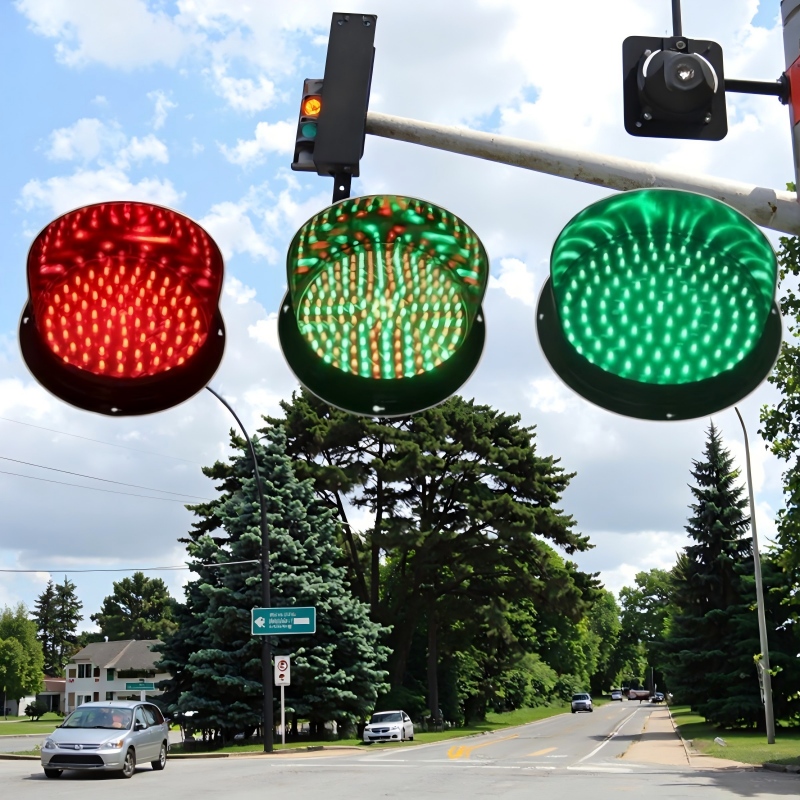
Choosing the appropriate size is a multi-factor engineering decision. Visibility requirements directly influence the choice. 200mm signal lights can provide sufficient visibility for medium to short visibility distances, but may not be sufficient for high-speed entrances. 300mm signal lights provide appropriate visibility for standard distances and function as an “enhanced visibility” feature at main entrances, making it a multi-functional choice. 400mm signal lights are specifically designed for maximum visibility and are typically used to improve signal recognition for elderly drivers or in complex visual environments (where LED signal lamps need to compete with visual distractions).
Cost and efficiency are practical considerations. 200mm signal lights have the lowest cost and power consumption, with savings in materials and the number of LEDs. The 300mm solution provides a balanced cost and power consumption to offer good visibility at an appropriate cost. The 400mm signal lights, although having more LEDs and a more robust housing, have the highest cost and energy consumption, but their excellent performance is often considered indispensable in critical, high-risk applications.
Making a choice between 200mm, 300mm, and 400mm traffic lights is a key engineering decision that balances safety, efficiency, and cost. 300mm signal lights are the standard choice for most modern intersections, while 400mm signal lights provide enhanced visibility for highways, wide roads, and complex urban environments. Conversely, 200mm signal lights are best suited for auxiliary and low-speed applications.
Post time: Sep-03-2026


