
In road traffic engineering procurement, octagonal and conical traffic light poles are the two main pole installation options. Many procurement parties struggle to make a quick decision, as each has its advantages in mechanical performance, appearance, cost, and construction adaptability. Choosing the right pole based on intersection conditions, budget, and project standards is crucial to balancing practicality and cost-effectiveness.
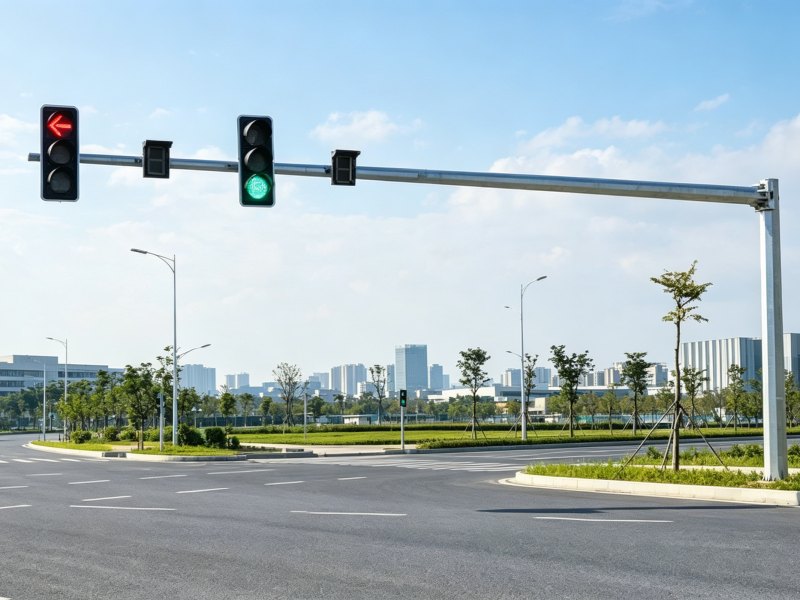
I. Differences in Structural and Mechanical Properties
Signal light poles that are octagonal in shape have a few advantages. For one, their unique shape makes them stronger and more resistant to bending and twisting. This means they can hold their own even when they’re carrying a lot of weight, like when they’re supporting long arms with multiple traffic lights or monitoring equipment. Plus, they’re better at withstanding strong winds, which can be a big deal in areas that are prone to storms or high gusts. The way they’re shaped, with eight sides, gives them a lot of stability and rigidity, even when they’re the same height and thickness as other types of poles. This makes them a great choice for areas where traffic lights need to be able to withstand the elements and keep on working smoothly.
Signal light poles that are shaped like cones have a special design. They get smaller as they go up, which helps spread out the stress evenly. This makes the force applied to the pole smooth and consistent. It also helps the pole resist strong winds better. When it comes to using these poles for a long time, the conical shape is especially good for arms that stick out to the side, as long as they’re not too long.
In short: Octagonal traffic light poles are preferred for long cantilever arms and heavy-duty equipment; conical poles are suitable for short cantilever arms and lighter load scenarios.
II. Appearance and Urban Landscape Compatibility
Octagonal Poles
Octagonal poles are really popular on main city roads, intersections, and new transportation projects because they look sharp and modern. They have clean lines and a neat shape, which makes them easy to see and recognize. This style of pole fits in well with the urban landscape and helps give cities a fresh, modern look.
Conical Poles
Conical traffic light poles are known for their smooth and rounded shape, which gives them a simple yet soft look. They also have a lighter appearance, making them a popular choice for certain areas. You can often find conical traffic light poles in rural roads, industrial park roads, and side roads in scenic areas, where it’s really important that the style of the poles matches the surrounding architecture. Some cities also use conical poles when they’re renovating old areas, so they can keep the original look and feel of the road. This way, the poles don’t stick out like a sore thumb, but instead blend in nicely with the rest of the environment.
III. Production, Transportation, and Cost Comparison
Making octagonal traffic light poles is a bit more complicated than making conical ones. It involves bending sheet metal, which means there are more steps to follow and the molds need to be of higher quality. As a result, the final products with the same specs cost a bit more than conical poles. If you’re looking for custom sizes that aren’t standard, it takes even longer to make octagonal poles. This is because the production process is more complex and requires more time to get everything just right. Overall, while octagonal traffic light poles might be a bit pricier and take longer to make, they can be a great option for those who need something specific.
Conical poles are made using a well-established process of rolling and spinning sheet metal, which makes production faster and more efficient. Because they come in standard sizes, they are also less expensive. Another benefit of these poles is that their rounded outer surface has no sharp edges, which reduces the risk of paint damage when they are being transported. This helps to keep them looking good and saves money on repairs. Overall, conical poles are a good choice because they are cost-effective and easy to handle.
IV. Applicable Scenarios
Octagonal Traffic Light Pole Recommended Scenarios:
- Urban main road intersections, interchanges, and large hub intersections;
- cantilever length ≥ 6 meters;
- one pole can accommodate multiple devices such as traffic lights, cameras, and radar;
- coastal areas with high winds, and projects with high wind resistance requirements.
Conical Traffic Light Pole Recommended Scenarios:
- Township roads, internal roads of industrial parks, and small T-junctions;
- shorter cantilever and fewer load-bearing devices;
- limited budget and preference for standardized, readily available products;
- scenic roads and cultural tourism supporting road projects.
V. Selection Summary and Recommendations
When it comes to choosing the right traffic light poles, there’s no one-size-fits-all solution – what works best depends on a few key factors. You’ve got to consider the length of the cantilever, the total weight of the equipment, the local wind conditions, the budget for the project, and how it’ll fit in with the surrounding landscape. For example, if you’re dealing with heavy loads, octagonal traffic light poles with long cantilevers are usually the way to go. On the other hand, if you’re working with lighter loads at smaller intersections and need to keep costs down, conical traffic light poles might be a better choice. The good news is that both types of poles can be treated with a hot-dip galvanizing and powder coating process to protect them from corrosion, which means they can last for 15 to 20 years outside, as long as the process is done to standard.
If you’re looking for expert advice, don’t hesitate to reach out to Qixiang. We have a wealth of experience in making signal light poles and supporting projects, so they can give you really valuable information on how to choose the right signal light poles, what the process is like, and all the engineering that goes into it.
Post time: Jul-30-2026


