
Because they save energy and don’t need wiring, solar-powered traffic lights are common at intersections and in construction zones. But many people want to know if they can still work in the rain when there isn’t enough sun. Don’t worry; there are five simple points that explain how long the batteries in high-quality solar traffic lights last in the rain. This makes it simple to understand. Let’s follow Qixiang, a solar traffic signal manufacturer, to discover the secrets behind it.
I. Clear Range of Battery Life in Rainy Weather
It’s not always clear how long solar-powered traffic lights can work in the rain; it mostly depends on how they are set up: Standard models can work steadily for 2 to 7 days in a row of rain after being fully charged. High-end energy-saving or emergency models can last even longer, up to 8 to 10 days, which is enough for most areas with rain, so you don’t have to worry about traffic control “dropping out.”
II. Battery Capacity is the Foundation of Battery Life
Batteries are the only way to store electrical energy, which is the main reason batteries last longer in the rain. Most high-quality solar traffic lights that are popular right now use lithium iron phosphate batteries that can hold between 60AH and 260AH. The more energy a battery can hold, the longer it lasts. A basic 60AH model can meet short-term daily needs on cloudy or rainy days, while a larger 260AH model can easily handle more than a week of cloudy or rainy weather.
III. Solar Panel Efficiency is Key to Recharging on Rainy Days
A lot of people think that solar panels can’t make electricity when it’s cloudy or rainy. In fact, light that is spread out can be taken in and turned into electricity. Monocrystalline silicon solar panels work best in low light, making 10% to 25% of their rated capacity. Monocrystalline silicon panels with 80W to 100W of power can slowly recharge even when it’s raining, which makes the battery last longer. Polycrystalline silicon panels, on the other hand, work a little worse in low light.
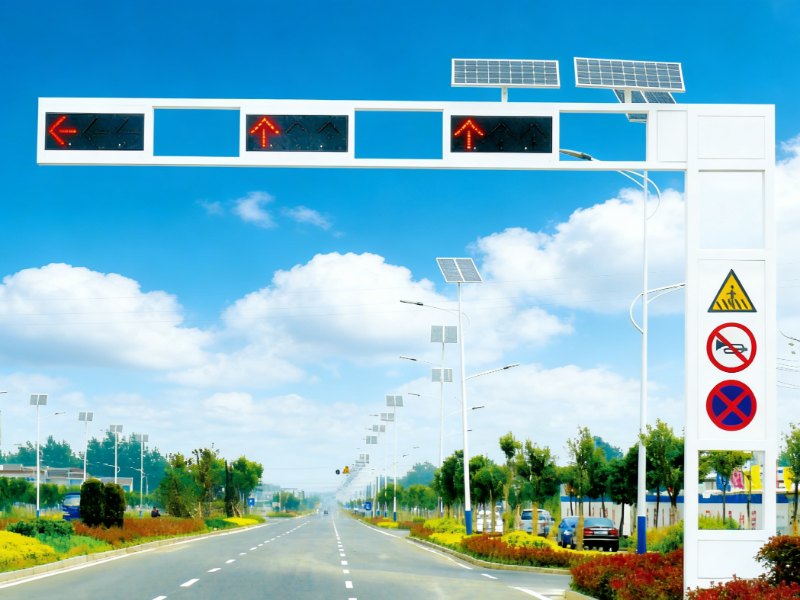
IV. Energy Saving Techniques to Reduce Losses
Besides “recharging,” “energy saving” is equally important. LED signal lights themselves have extremely low power consumption, with a single light typically consuming less than 15W, reducing energy consumption at the source. When paired with an MPPT charging controller, they optimize charging efficiency and intelligently adjust brightness, avoiding unnecessary energy waste. Some intelligent models can even achieve “fast charging and slow discharging,” significantly improving battery life.
V. Installation and Cleaning Affect Battery Life
Besides core components, the installation angle and panel cleanliness indirectly affect battery life. Installing the solar panel at an angle avoids rainwater accumulation and obstruction; keeping the panel clean and free of stains improves light absorption efficiency, resulting in better charging on cloudy or rainy days and further extending operating time.
Welcome to wholesale solar traffic signals from Qixiang! We are a professional solar traffic signal manufacturer with rich production experience, focusing on high-quality solar traffic lights, flashing warning lights, pedestrian signals and road safety products. Our products feature stable solar power supply, high brightness, long service life, energy saving and environmental protection, widely used in roads, highways, construction sites and parking lots. We support large quantity wholesale, factory direct price, fast delivery and reliable after-sales service. Whether you are a distributor, trader or engineering contractor, we can provide you with cost-effective products and customized solutions. Warmly welcome customers to contact us for cooperation!
Post time: Apr-09-2026


